Home / Solutions / Vulnerability Management

Vulnerability Management

Most programs end at “ticket closed.” Yours should end at “fix proven.”

Vortex takes the findings you already have, confirms which ones are actually exploitable, writes the fix, and retests to prove the path is closed. Remediation comes with evidence attached — not a developer’s word for it.

Ingests SonarQube, Snyk, and GitHub findings. Every closure retested.
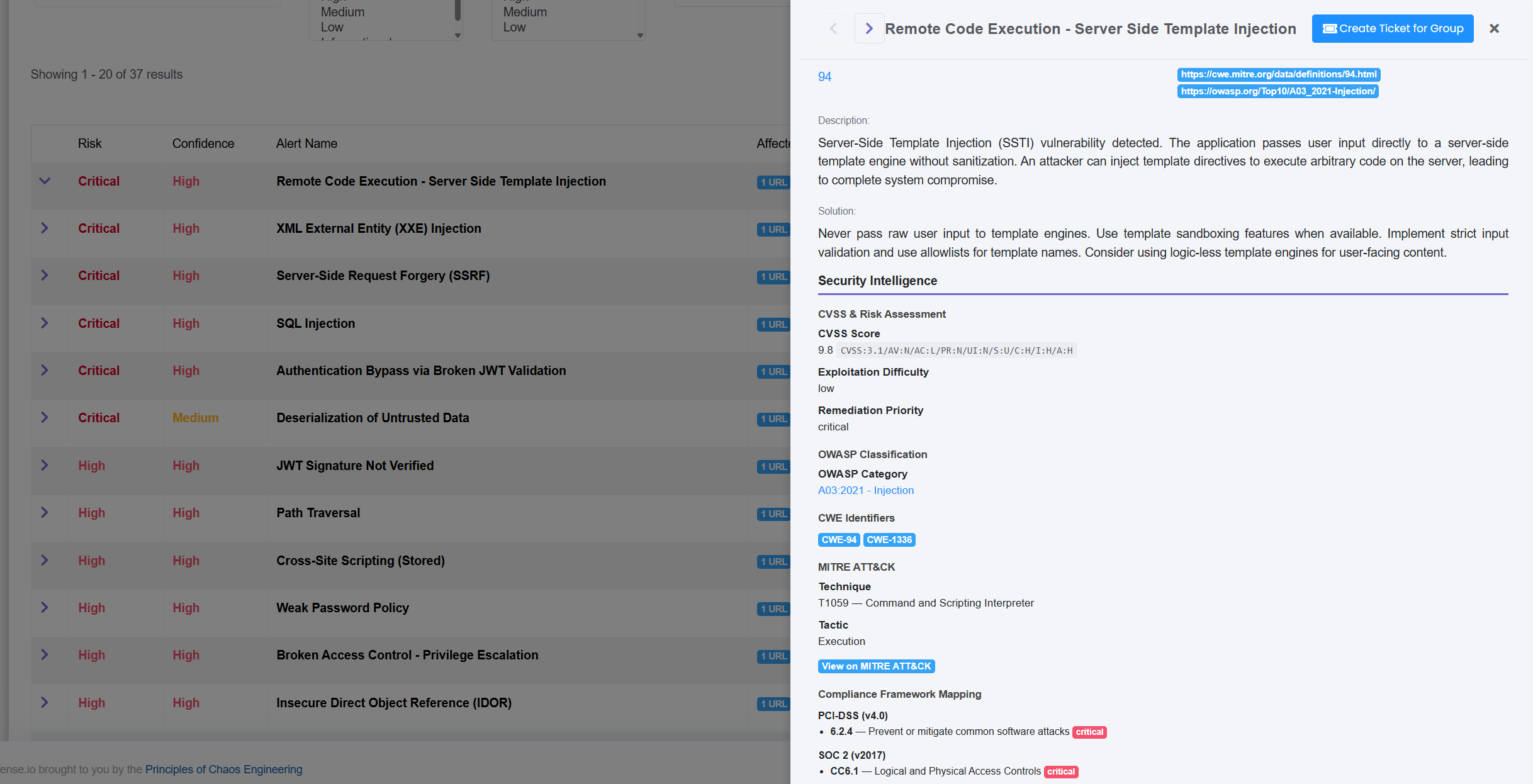
vortex — findings — all sources RETESTED
Vortex findings dashboard showing vulnerabilities from multiple sources with exploit-validated status and remediation state

The lifecycle doesn’t fail in the phases. It fails in the handoffs.

Discover, assess, prioritize, remediate, verify, report. Every program runs the same six phases, and every program leaks at the same three seams between them.

ScanningPrioritization

Severity is not exploitability

A CVSS 9.8 on a code path nothing can reach outranks a medium that is trivially exploitable in production. Rankings built from severity alone send your best engineers at the wrong work.

RemediationVerification

“Done” is a status, not evidence

A ticket moves to closed when someone says the work happened. Nothing re-runs the original attack to confirm the path is actually shut. This is where programs leak the most risk.

VerificationReporting

Proof gets rebuilt by hand

At audit time someone reassembles months of remediation history from tickets and screenshots, because the evidence was never captured at the moment the fix was verified.

Keep your scanners. Vortex takes it from findings to proof.

You do not need to rip anything out. Vortex pulls in the findings your existing tools already produce, then does the part they cannot: confirm what is real and close it.

SonarQube Snyk GitHub alerts GitLab alerts Vortex DAST Vortex network

01

Normalized and deduplicated

The same flaw reported by three tools becomes one finding with three sources attached — not three tickets competing for the same engineer.

02

Validated against what’s running

Vortex attempts the exploit on your live application. Findings that cannot be reproduced are marked as such before they ever consume a remediation slot.

03

Ranked by proven risk

What is confirmed exploitable rises. What is theoretical drops. Your queue reflects what an attacker could actually do today.

Test, validate, fix, retest, prove — on a schedule, with receipts.

Vortex owns the handoff from remediation to verification, so a closed finding carries the evidence that closed it.

01

Test

Continuous testing across your applications, APIs, and network — plus every finding your other scanners hand over.

02

Validate

Vortex attempts the exploit before the finding reaches a human. Unreproducible findings never enter the queue.

03

Fix

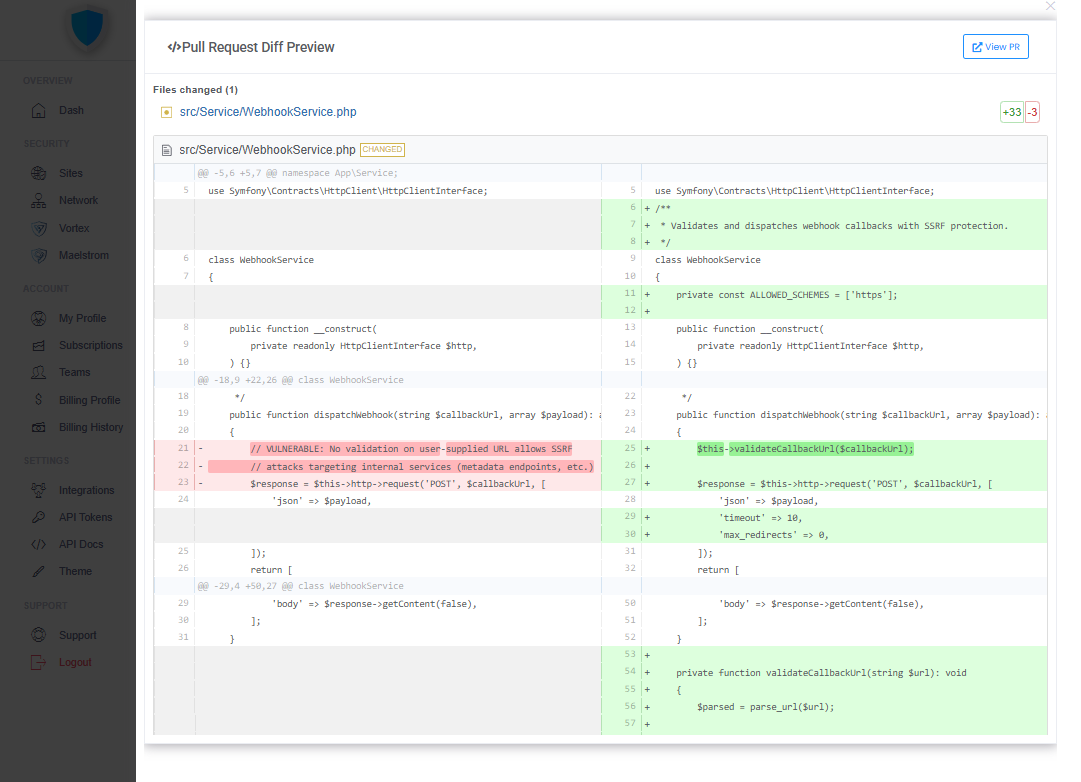
For common vulnerability classes Vortex opens a pull request with the fix already written. Your developer reviews the diff and merges.

04

Retest

After the merge, Vortex re-runs the original attack. The finding closes when the path is shut — not when a status changes.

The seam most programs skip
05

Prove

The exploit, the fix, and the passing retest are captured together as evidence — ready for your auditor without a reconstruction exercise.

github — fix opened by vortex MERGED
Pull request opened by Vortex containing the fix for a confirmed vulnerability, shown merged
How remediation becomes audit evidence →

A lifecycle that ends at “fix proven” is the only one that reduces risk.

5
Stages, closed loop
test · validate · fix · retest · prove
90%
Fewer alerts
only confirmed findings surface
4
Finding sources ingested
SonarQube · Snyk · GitHub · GitLab
100%
Retested before close
no finding closes on status alone

BestDefense.io helped us find critical vulnerabilities and helped to drastically reduce the amount of time to resolve them through their automated workflows. This allowed us to secure enterprise customers who required we had a 3rd party audit.

Thariq Kara
BiteData.io

Detect. Defend. Deter.

Bring your current findings. We’ll show you which ones are real.

Point Vortex at your existing scanner output and your running application. You’ll see which findings survive validation, which get a fix PR, and what the evidence looks like when the retest passes — on your own data, not a staged walkthrough.

Ingests SonarQube, Snyk, GitHub, and GitLab findings. Every closure retested. Evidence exportable for SOC 2, PCI DSS, ISO 27001, and NIST.